· Don Davis · EMT · 8 min read
Stress Management for Emergency Responders — What Actually Helps
Practical stress management for emergency responders in Alberta: what to do on shift, after a bad call, and when it's time to get more support.
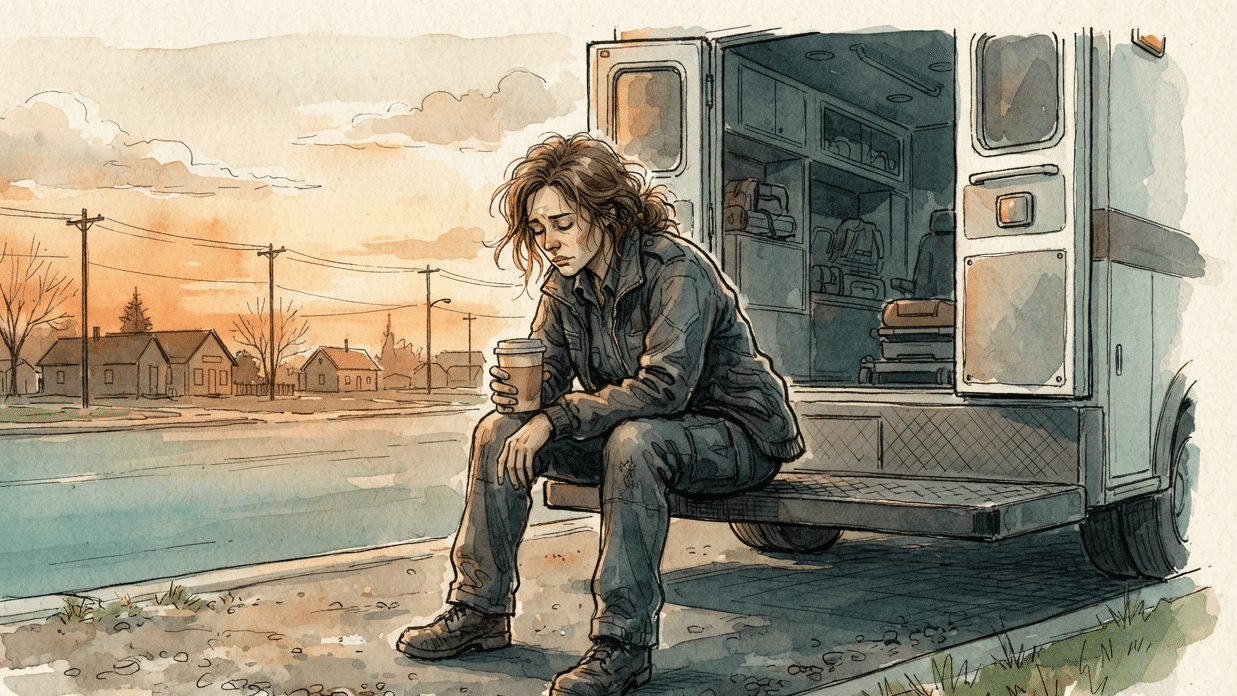
You chose a job where other people’s worst days are your normal Tuesday. That takes a toll, and pretending it doesn’t rarely ends well. Stress management for emergency responders doesn’t mean bubble baths and positive thinking. It means a few practical habits you use on shift, a plan for after the hard calls, and knowing early when it’s time to bring in help.
Here’s the short answer if you’re in a hurry. Pace yourself and take real breaks. Watch out for your partner and let them watch out for you. Protect your sleep and your meals. Talk when you’re ready. If your symptoms hang on for weeks or start getting in the way of your life, talk to a professional. Read on for the detail.
Why stress hits emergency responders differently
Most people go years without seeing anything truly awful. You might see it several times a shift. Canadian researchers who surveyed public safety personnel, including correctional workers, dispatchers, firefighters, paramedics and police officers, point out that these workers are exposed to potentially traumatic events as a function of their work1.
The numbers from that same study are sobering. Across the whole sample of 5,813 Canadian public safety personnel, 44.5% reported symptoms consistent with at least one mental disorder. Among all participants, 23.2% screened positive for PTSD symptoms1.
Those are screening results, not diagnoses. They still tell you something useful, though. If you’re struggling, you’re far from the only one in your hall, detachment or unit, and it says nothing about whether you’re cut out for the job.
Stress also builds slowly. It isn’t only the one call that sticks with you. It’s the shift work, the overtime, the paperwork, the short-staffed nights and missing your kid’s game again. All of that piles up quietly in the background.
Signs your stress is building
It helps to know what stress looks like so you can catch it before it catches you. The U.S. National Institute for Occupational Safety and Health lists physical signs of traumatic incident stress such as fatigue, headaches, nausea, dizziness and jaw clenching. The same guidance describes thinking signs like confusion, trouble concentrating, memory problems and nightmares2.
On the emotional side, NIOSH lists anxiety, fear, grief, guilt, irritability and feeling overwhelmed. Behaviour changes can include intense anger, pulling away from others, emotional outbursts, changes in appetite and drinking more alcohol than usual2.
One important exception: chest pain, trouble breathing, severe pain or signs of shock need immediate medical attention2. Don’t write those off as stress.
People at home often see the changes before you do. If your partner says you’ve been short-tempered or far away lately, it’s worth taking that seriously rather than arguing about it.
Stress management for emergency responders during a shift
You can’t control the calls, but you have more say over how you get through a shift than it might feel like. NIOSH recommends pacing yourself and taking frequent breaks away from the work area during an incident2. That might mean five minutes outside the truck between calls instead of going straight to your phone.
Look out for each other, too. NIOSH advises responders to watch out for coworkers, because someone who is focused on the task can miss hazards2. The same goes for the quieter hazards. If your partner has gone silent after a rough call, a simple “You good?” in the rig counts for something.
The basics matter more than they get credit for. NIOSH recommends eating and sleeping on a regular schedule and drinking plenty of fluids2. Rotating shifts make this hard, so aim for good enough. Keep real food in your bag and protect whatever sleep window you’ve got.
When your heart is still pounding after a call, slow your breathing on purpose. MyHealth Alberta explains that breathing deeply sends your body a message to calm down and relax3. A few slow breaths before you key up the radio or walk into the next scene won’t erase a bad call. It can help you show up for the next one.
The details look a bit different depending on your role. We’ve written specific guides on stress management for firefighters if you work in fire. Police readers can find similar advice for their work in our post on stress management for police officers.
What to do after a hard call
The hours and days after a tough call are when a lot of responders either reset or start to slide. Some of NIOSH’s suggestions are worth borrowing.
Talk on your own terms
NIOSH’s advice is to talk to people when you feel like it, sharing your experience at your own pace2. You don’t have to tell the whole story at the kitchen table that night. You also don’t have to bottle it up forever. A trusted crewmate, peer support member, chaplain or partner can all be good places to start. MyHealth Alberta notes that talking with others about your feelings is a healthy way to relieve stress3.
Expect some replay
NIOSH says to expect recurring thoughts or dreams after an incident, and that they typically decrease over time2. Knowing that ahead of time can take some of the fear out of it. A few rough nights don’t automatically mean something is wrong with you.
Get back to your routine gradually
NIOSH suggests returning to your routine gradually, keeping up rest, exercise and balanced meals, and holding off on major life decisions for now. It also recommends limiting drugs and alcohol2. The after-shift beer is a deep tradition in a lot of crews, and it’s an easy habit to slide into. If you want other ways to come down after a shift, our guide to alternatives to drinking after shift has ideas that actually fit responder life.
Use your employer’s supports
NIOSH encourages workers to use any formal mental health support their employer provides2. That could be a peer support team, an employee and family assistance program or a critical incident debrief. These programs vary, so it’s worth finding out what yours offers before you need it.
Habits that help on your days off
Long-term stress management happens mostly between shifts. MyHealth Alberta lists several ways to relax your body, including regular exercise such as walking, stretching to relieve muscle tension, and progressive muscle relaxation, which reduces muscle tension by relaxing one muscle group at a time3.
For your mind, MyHealth Alberta suggests mindful meditation and notes that it may take some practice. It also suggests writing for 10 to 15 minutes a day about stressful events and how they made you feel3. Plenty of responders who would never call themselves journal people find that getting a call out of their head and onto paper helps.
Don’t underrate the things you enjoy, either. MyHealth Alberta says doing something you enjoy can help you relax and that humour may reduce stress3. Dark humour gets a lot of responders through a shift. Hockey, fishing, time with your kids and friends outside the job matter too, because they remind you there’s more to you than your uniform.
When self-care isn’t enough
Self-care is a foundation, not a cure-all. NIOSH says that if symptoms or distress continue for several weeks, or if they interfere with daily activities, it’s time to seek help from a mental health professional2. Some examples: you can’t sleep, you’re dreading every shift, your relationships are fraying or you’re drinking to cope.
Getting help is not a sign that you’ve failed. It’s the same call you’d make for anyone else. A therapist who understands the work won’t need a glossary of radio codes or a softened version of what you saw. Our guide on finding a therapist who understands responder culture walks through what to look for. We also offer first responder therapy across Alberta for police, fire, EMS, corrections and other frontline workers.
If you’re in crisis right now, call 911 or 988, the Canada Suicide Crisis Helpline. In Alberta, the Alberta Health Services Mental Health Help Line at 1-877-303-2642 and Health Link at 811 are also there for you4.
If you’re not in crisis but you’ve recognized yourself in this post, try one small step this week. Talk to someone you trust, check what supports your employer offers, or reach out to book a consultation with a therapist who works with responders every day.
Sources
- Mental Disorder Symptoms among Public Safety Personnel in Canada, Canadian Journal of Psychiatry (Carleton et al., 2018), via PubMed Central
- Traumatic Incident Stress, Centers for Disease Control and Prevention / NIOSH
- Stress Management: Relaxing Your Mind and Body, MyHealth Alberta (Alberta Health Services)
- Helplines and Distress Lines, MyHealth Alberta (Alberta Health Services)
Don Davis
15+ years of emergency response experience. Passionate about connecting our first responder communities with critical resources. Author of hundreds of articles and guides on First Responders mental health care. When not responding to emergencies, you can find me playing with my dogs, hiking, or enjoying a good book.
Ready to connect with a provider?
Allow us to connect you with a provider who can help.