· Don Davis · EMT · 7 min read
Post-Shift Decompression Rituals for First Responders
Practical post-shift decompression rituals for first responders: leave the call at work, wind down, sleep and reconnect at home.
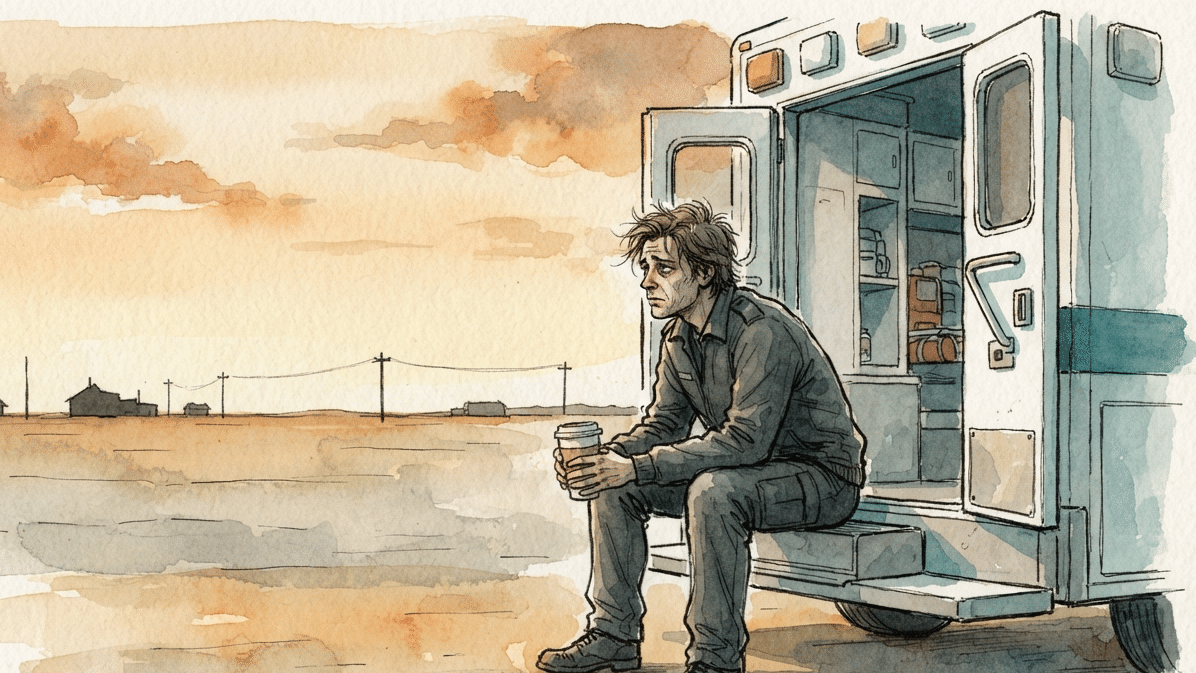
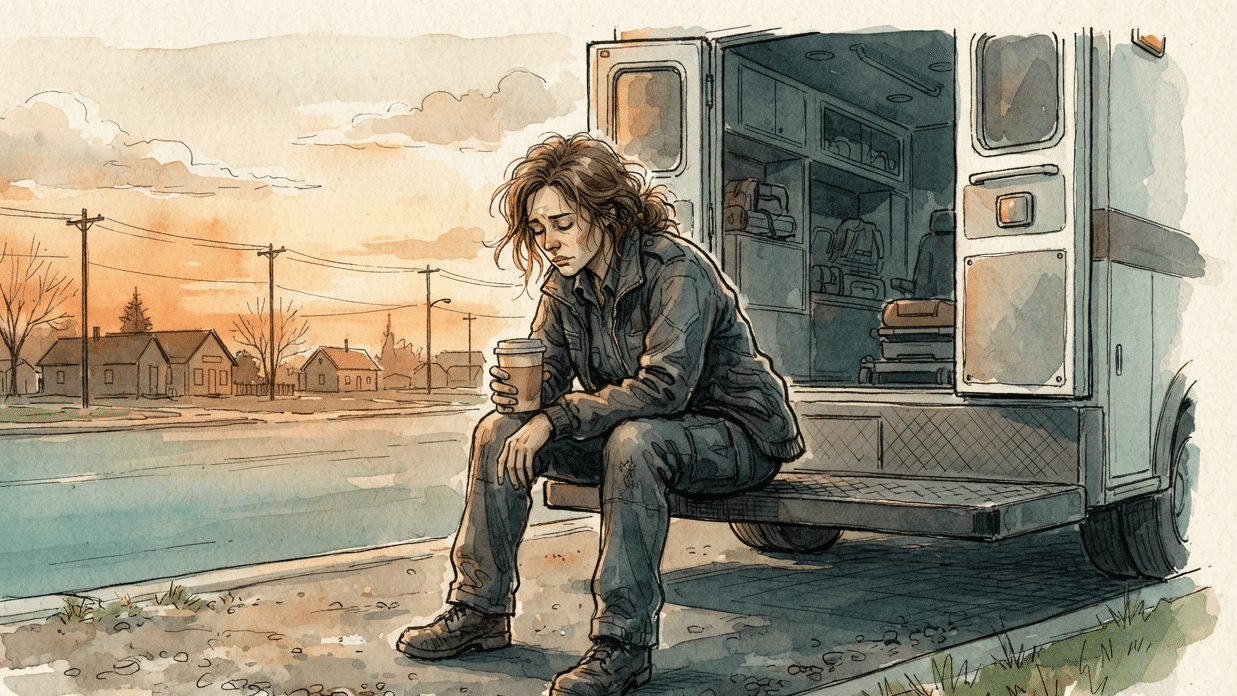
You walk out of the station, the hospital or the detachment, but your body hasn’t caught up yet. Your heart’s still running a little fast, your brain is replaying the last call, and in twenty minutes you’re supposed to be chatting over supper. Post-shift decompression rituals for first responders are small habits you repeat after every shift to close it out and get back to the rest of your life. They’re not magic and they won’t erase a hard call. If you do them every time, though, they give you a clear signal that the job is over for now.
Here’s what that looks like in practice, what the research does and doesn’t say, and how to tell when a ritual isn’t enough.
Why the end of a shift is so hard to leave behind
On shift, you’re primed to scan, react and decide fast. That doesn’t switch off the second you clock out. Lots of responders say the drive home is when the call finally “lands”, or they catch themselves snapping at family over nothing. If that sounds familiar, our piece on irritability after a police shift looks at why that on-alert feeling follows people home.
Sleep is where this shows up most. A large survey of Canadian public safety personnel covered dispatchers, correctional workers, firefighters, municipal and provincial police, paramedics and RCMP members. Between 49% and 60% of each group reported symptoms consistent with clinical insomnia, and poorer sleep quality went along with higher scores on screens for PTSD, depression, anxiety and alcohol use disorder1. That study was a snapshot in time, so it can’t tell us whether poor sleep causes those problems or the other way round. Still, it’s a good reason to pay attention to the hours right after a shift.
What makes a decompression ritual work
Researchers who study recovery from work talk about “psychological detachment”, which means mentally switching off from the job during your time off. A meta-analysis that pooled 86 publications found detachment was linked to better mental and physical health and well-being, while doing work-related things during time off was linked to less detachment2. Most of that research looked at ordinary workplaces, not emergency services, so treat it as a useful direction rather than a guarantee.
In practice, the rituals that stick tend to have three things in common. They’re short enough that you’ll actually do them after a 12-hour night. They happen at the same point every time, so they turn into a cue. And they draw a clear line: before this, I’m at work; after this, I’m not.
Post-shift decompression rituals you can start this week
You don’t need all of these. Pick one or two that fit your job and your home life, and give them a few weeks before you decide whether they’re working.
Mark the end of the shift
Plenty of responders use a physical action as the line: changing out of uniform before leaving, washing their hands and face, or closing the locker with a deliberate “done”. Some take the same route home or stop at the same spot for five minutes before going inside. The action itself matters less than doing it every single time.
Take a few minutes for slow breathing
MyHealth Alberta says breathing exercises are a good way to relax, reduce tension and relieve stress. It describes 4-7-8 belly breathing like this: breathe in slowly through your nose for a count of 4, hold for a count of 7, breathe out completely through your mouth for a count of 8, and repeat 3 to 5 times3. You can do it in a parked truck before you walk in the door.
Move your body
Many responders find a walk, a run or a gym session helps them shake off a shift. Canada’s movement guidelines for adults recommend at least 150 minutes of moderate to vigorous aerobic activity a week, plus 7 to 9 hours of good-quality sleep with consistent bed and wake-up times4. Rotating shifts make the “consistent” part tough, so do what you can: a walk with the dog after days, or a short workout on your first day off.
Put the phone and the scanner away
Checking the group chat, reading news coverage of the call or leaving the scanner on keeps you half on shift. Choose a point, like the end of your drive home, when work stuff gets put away until your next shift. That lines up with the detachment research above, and it’s one of the easiest changes to make.
A short, honest check-in at home
You don’t have to give your partner or kids the graphic details, and many responders choose not to. A simple script still helps: “Rough one tonight. I need 20 minutes, then I’m all yours.” Your family knows what’s going on without having to guess, and you get time to land.
Keep a wind-down routine before sleep
After night shifts especially, a short routine you repeat every time can become its own cue for sleep: a shower, blackout blinds, the same quiet podcast. If your sleep stays broken for weeks anyway, have a look at our overview of CBT-I for shift-work insomnia.
The challenges of post-shift decompression rituals
These rituals sound simple on paper, and then real life gets in the way. Holdovers and late calls wreck your routine. Kids want you the second you walk in. In rural Alberta you might face a long drive home, or never feel fully off because yours is the only unit for a long way. So build a mini version you can do anywhere: three slow breaths in the parking lot, a change of shirt, the phone in the glovebox.
The other trap is a “ritual” that’s really numbing. Leaning on a couple of drinks to come down is a habit worth watching. In the Canadian survey mentioned above, poorer sleep quality was linked to higher scores on an alcohol use disorder screen1. If your wind-down depends on alcohol, that’s worth an honest look.
Avoidance can pass for a ritual too: never talking about anything, staying busy so you don’t have to think. A good ritual helps you put the shift down, not pretend it never happened. For more ideas that hold up on real shift schedules, see our guide to stress management for emergency responders.
When a ritual isn’t enough
Rituals are maintenance, not treatment. You might still be replaying calls weeks later, having nightmares, steering clear of parts of the job, drinking more to get to sleep, or feeling flat and cut off from the people you love. If so, it’s time to talk to someone who works with responders. That doesn’t mean you’ve failed at decompressing.
In Alberta, you can call the Mental Health Helpline any time, 24/7, at 1-877-303-2642. If you’re thinking about suicide, call 988, the Suicide Crisis Helpline5. If you’re in immediate danger, call 911. Your employee and family assistance program and your peer support team are other places to start.
If you’d like to work with a therapist who understands shift work and the calls that come with it, you can read about first responder therapy in Alberta. When you’re ready, you can book a confidential consultation with our team.
Sources
- Sleep Quality and Mental Disorder Symptoms among Canadian Public Safety Personnel, International Journal of Environmental Research and Public Health (Angehrn et al., 2020), via PubMed Central
- A Meta-Analysis on Antecedents and Outcomes of Detachment from Work, Frontiers in Psychology (Wendsche and Lohmann-Haislah, 2017), via PubMed Central
- Stress Management: Doing Breathing Exercises, MyHealth Alberta (Government of Alberta / Alberta Health Services)
- Canadian 24-Hour Movement Guidelines for Adults aged 18–64 years, Canadian Society for Exercise Physiology
- Addiction & Mental Health Help Lines, Alberta Health Services

Don Davis
15+ years of emergency response experience. Passionate about connecting our first responder communities with critical resources. Author of hundreds of articles and guides on First Responders mental health care. When not responding to emergencies, you can find me playing with my dogs, hiking, or enjoying a good book.
Ready to connect with a provider?
Allow us to connect you with a provider who can help.