· Don Davis · Firefighter · 6 min read
Stress Management for Firefighters — What Actually Helps
Firefighter stress is unlike most workplace stress. Here's a practical look at what actually works — from daily habits to professional support — for the long haul.
You don’t need to be told that firefighting is stressful. You live it. The alarms, the calls, the things you can’t unsee. But the kind of stress that accumulates in this job isn’t the same as the deadline pressure a project manager deals with on a Tuesday. It’s physical, psychological, and relentless — and if you’re not actively managing it, it tends to manage you.
This post is about stress management for firefighters in a practical, grounded sense. Not the fluffy wellness poster stuff. What works, what doesn’t, and what to do when the usual coping strategies stop cutting it.
Why Firefighter Stress Is Built Into the Job
The fire service is structurally set up to generate stress. You work long shifts, often followed by a second job or family demands. Your sleep gets interrupted by alarms. You spend hours in a state of readiness waiting for the call that might be routine or might be the worst thing you’ve ever seen — and you won’t know until you’re already rolling.
On top of that, there’s the culture. The expectation that you push through, stay sharp, and hold it together regardless of what happened on the last call. That culture isn’t all bad — it builds cohesion and resilience. But it can also make it genuinely hard to acknowledge when you’re struggling, even to yourself.
Chronic operational stress also interacts badly with cumulative exposure. A single traumatic incident is hard. Dozens of them, stacked over years, with no real processing in between? That’s where you start to see the breakdown — irritability, sleep problems, emotional numbing, physical symptoms that don’t seem to have a cause.
Recognizing the Signs Before They Become a Crisis
Stress management for firefighters works best when you catch things early, not after you’ve spent six months white-knuckling it. That sounds obvious, but it’s harder than it sounds when the baseline in your station is already high.
Watch for the patterns, not the big moments. It’s rarely one call that tips the scale. It’s the way you’ve stopped talking to your partner, the drinks that crept up from two to four, the feeling of dread before a shift you used to look forward to. It’s snapping at your crew over nothing. It’s being home but not really being there.
Burnout and compassion fatigue can look a lot like stress — and they often travel together. Knowing the difference matters because the recovery path isn’t identical. But the entry point is the same: acknowledging something’s off, and taking it seriously.
What Actually Works for Managing Stress
There’s no shortage of advice out there. A lot of it is fine in theory and impractical in practice. Here’s what tends to hold up.
Physical recovery isn’t optional
Exercise is legitimately one of the most effective stress regulators available, and most firefighters already know this. The problem is that shift work, fatigue, and injury can disrupt training consistency. Try to protect at least some form of regular physical activity — not necessarily intense, but consistent. Even thirty minutes of walking or lifting several times a week has a measurable impact on cortisol and mood.
Sleep is the other big one. Shift workers are at a structural disadvantage here, but the habits around sleep matter as much as the schedule. Reducing screen exposure before sleep, keeping a dark and cool room, and being honest about alcohol’s effect on sleep quality (it disrupts REM even if it helps you fall asleep initially) are all worth the effort. If chronic insomnia is part of your picture, cognitive behavioural therapy for insomnia has a strong evidence base specifically for shift workers.
Your relationships are load-bearing
Isolation is one of the most reliable predictors of poor mental health outcomes in first responders. The crew bond is real and valuable — but peer connection at the station isn’t a substitute for relationships outside the job, and it’s not a substitute for being genuinely open with the people you trust.
That’s a hard ask when the job has trained you to compartmentalize. But the research on social support as a buffer against occupational stress is consistent: people who maintain strong, honest relationships outside of work fare better over time. That doesn’t mean debriefing every hard call with your spouse. It means staying connected. Actually talking. Not disappearing into the couch and the TV when you’re home.
Build a routine that includes decompression
Transitions matter. Going from a high-intensity shift directly into the demands of family life is jarring — and doing it repeatedly without a decompression buffer takes a toll. Some people use the drive home deliberately. Some exercise. Some need thirty quiet minutes before engaging. The specific form matters less than having one.
The concept of a “mental go-bag” — a set of proactive strategies you can deploy when you feel stress building — is worth developing before you need it. If you don’t have a clear sense of what helps you reset, start paying attention. What actually works for you is probably not the same as what works for your watch commander.
When Self-Management Isn’t Enough
There’s no shame in hitting a wall. Stress management for firefighters is a real skill set, but it has limits. When stress has crossed into PTSD, severe anxiety, depression, or substance use, self-help strategies aren’t sufficient on their own — and trying to manage it alone can make things worse.
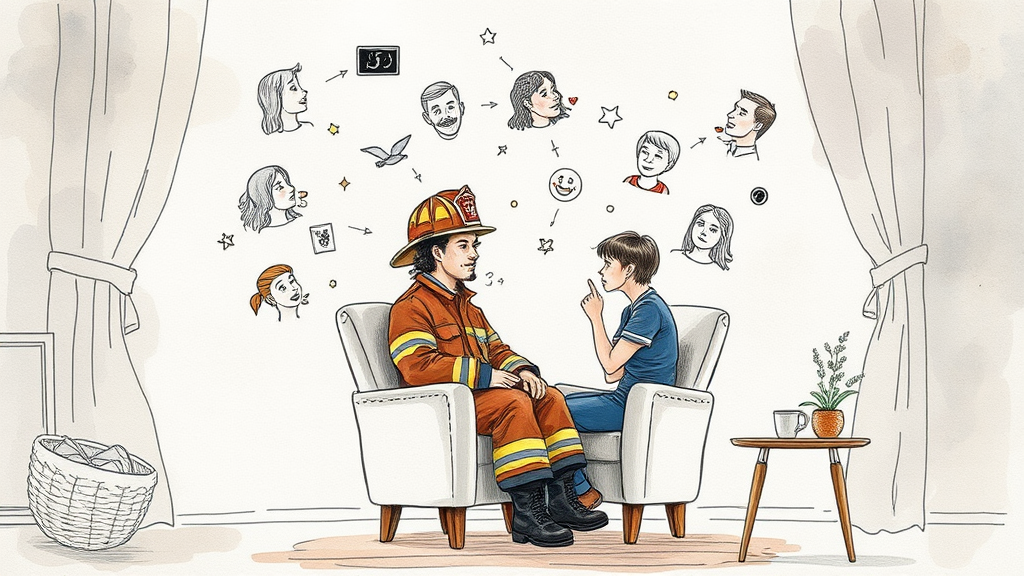
Professional support from a therapist who actually understands the fire service is different from generic counselling. You don’t want to spend six sessions explaining how shift work and critical incidents work. You want someone who can get to work on what’s actually happening with you.
That kind of care exists. If you’re in Alberta, there are mental health services specifically for firefighters that are built around the realities of the job — including the confidentiality concerns, the occupational culture, and the specific trauma patterns that come up in emergency services work.
If you’re not sure whether you’re in the territory of “stress” or something that needs more support, err on the side of talking to someone. A single session isn’t a commitment — it’s information.
Taking the First Step
The biggest barrier most firefighters describe isn’t finding help. It’s deciding to look. There’s still a version of the culture that treats seeking support as weakness, but that’s genuinely shifting — driven in large part by firefighters themselves speaking openly about what chronic untreated stress does over time.
You already accept that physical injuries need treatment. The same logic applies here. Stress that gets managed stays manageable. Stress that gets ignored finds a way out.
If you’re ready to talk to someone, reach out to us and we can match you with a therapist who works with first responders. No pressure, no judgment — just a starting point.

Don Davis
15+ years of emergency response experience. Passionate about connecting our first responder communities with critical resources. Author of hundreds of articles and guides on First Responders mental health care. When not responding to emergencies, you can find me playing with my dogs, hiking, or enjoying a good book.
Ready to connect with a provider?
Allow us to connect you with a provider who can help.